Tuesday, January 10, 2012

10 Stubborn Body Myths That Just Won't Die, Debunked by Science

10 Stubborn Body Myths That Just Won't Die, Debunked by Science:
10 Stubborn Body Myths That Just Won't Die, Debunked by Science

GET OUR TOP STORIES

FOLLOW LIFEHACKER

10 Stubborn Body Myths That Just Won’t Die, Debunked by Science

Hair grows back thicker when you shave it! Reading in dim light turns you blind! Peeing on a jellyfish sting will soothe the pain! The way our bodies work is a bit of a mystery, and our desire to unlock its secrets has led to a vast amount of misinformation. Many of these false notions are more widely believed than the truth. We took our healthy skepticism and a bunch of research to find the truth behind some of the most common myths about our bodies. Here's what we learned.

Title image remixed from originals by Z-art (Shutterstock), Leremy (Shutterstock), and myVector (Shutterstock).

Note: Knowledge is power, so as we see it, misinformation makes us weak. Our myth-busting series aims to root out common myths so you can make better, more informed decisions.

Myth 1: Body Hair Grows Back Thicker When You Shave It

10 Stubborn Body Myths That Just Won't Die, Debunked by ScienceYou might remember that episode ofSeinfeld where Jerry decides to shave his chest despite warnings that it will grow back twice as thick. Although the myth proves to be true on television, it's very much false in the real world. If shaving caused hair to grow in much thicker, balding men would be shaving their heads for hair loss prevention. Children's health researcher Rachel C. Vreeman and assistant professor of pediatrics Aaron E. Carrol put this myth to rest:

Strong scientific evidence disproves these claims. As early as 1928, a clinical trial showed that shaving had no effect on hair growth. More recent studies confirm that shaving does not affect the thickness or rate of hair regrowth. In addition, shaving removes the dead portion of hair, not the living section lying below the skin's surface, so it is unlikely to affect the rate or type of growth. Shaved hair lacks the finer taper seen at the ends of unshaven hair, giving an impression of coarseness. Similarly, the new hair has not yet been lightened by the sun or other chemical exposures, resulting in an appearance that seems darker than existing hair.

Basically, shaved hair feels coarse and that leads you to believe it's thicker. In reality you're just fooling yourself and your hair remains the same.

Photo by Phil and Pam Gradwell.

Myth 2: Calories Counting Is All That Matters for Weight Management

10 Stubborn Body Myths That Just Won't Die, Debunked by ScienceWe might like to believe that calories-in-equals-calories-out is a sufficient weight loss theory, but that means we have to accept our bodies are pretty simple. While consuming fewer calories can certainly have an impact, not all foods have the same impact once we stuff them down our throats. If you want to think about it in a very simple way, consider the difference between a candy bar and a cucumber. They taste different, they consist of different nutritional elements, and arenot the same thing. It doesn't make sense that they'd be used by your body in the same way.

The problem with the idea of calories being the only necessary metric is that we think of a calorie as a physical thing. Calories are just a means of measuring heat, and they weren't initially a term used in reference to food. A calorie, according to Wikipedia, "approximates the energy needed to increase the temperature of 1 gram of water by 1 degree Celsius." Basically, calories are a measurement and not something your body uses for fuel. What your body doesuse is what it finds in the foods and liquids it digests. If you put crap in your body, you're not going to be better off just because of a low-calorie rating.

The way your body processes sugar is an excellent example of how different foods yield different results. While the idea that health can come from eating a magic number of calories each day, the reality is that foods and your body are more complex. Pay attention to the composition of the foods you eat and you'll wind up with much better results.

Photo by Victor Hertz.

Myth 3: You Need Eight Hours of Sleep Per Day

10 Stubborn Body Myths That Just Won't Die, Debunked by ScienceWe're told we need to sleep eight hours each night, and while that's true for some it isn't true for all. The Hindustan Times points to a European study that showed people who possessed a gene known as ABCC9 could sleep for significantly fewer hours than the average person. Finding the same gene in fruit flies, the scientists found that by manipulating it they could also manipulate the amount of time the fruit flies spent in a restful state. When we asked you how much sleep you require, the results varied quite a bit. For some, eight hours was necessary. For others, it was too much. Your experiences match this study.

Additionally, Wired Magazine profiled a chemical called Orexin A that is believed to work as a sleep replacement. It's already present in humans in limited amounts, and when depleted causes us to feel tired. Since its discovery, Orexin A has been fashioned into a nasal spray (for testing purposes) to find out if it can be used as a treatment for narcolepsy. In a study at UCLA, a few scientists decided to make some tired monkeys snort the chemical:

The monkeys were deprived of sleep for 30 to 36 hours and then given either orexin A or a saline placebo before taking standard cognitive tests. The monkeys given orexin A in a nasal spray scored about the same as alert monkeys, while the saline-control group was severely impaired.

While information about Orexin A is still rather new, it points to the possibility that sleep may not be as relevant as we think it is. Either way, while eight hours of sleep isn't a bad recommendation it is definitely not a necessity for everyone.

Photo by Joi Ito.

Myth 4: Reading in Dim Light Ruins Your Eyes

10 Stubborn Body Myths That Just Won't Die, Debunked by ScienceReading in dim light is supposed to be bad for you, which is somewhat evidenced by a surviving bedside lamp and book light industry. If not, you've certainly been told to turn on a light when reading in the near-dark. While reading without sufficient lighting can cause eye strain, according tochildren's health researcher Rachel C. Vreeman and assistant professor of pediatrics Aaron E. Carrol it won't cause any serious and permanent damage:

The majority consensus in ophthalmology, as outlined in a collection of educational material for patients, is that reading in dim light does not damage your eyes. Although it can cause eye strain with multiple temporary negative effects, it is unlikely to cause a permanent change on the function or structure of the eyes. Even in patients with Sjögren's syndrome (an autoimmune disease that features inflammation in certain glands of the body), decreased functional visual acuity associated with strained reading improves when they stop reading. One review article on myopia concludes that increased use of one's eyes, such as reading in dim light or holding books too close to the face, could result in impaired ocular growth and refractive error. The primary evidence cited was epidemiological evidence of the increased prevalence of myopia and the high incidence of myopia in people with more academic experience. The author notes that this hypothesis is just beginning to "gain scientific credence." In the past reading conditions involved even less light, relying on candles or lanterns, so increased rates of myopia over the past several centuries does not necessarily support that dim reading conditions are to blame. In contrast to that review, hundreds of online expert opinions conclude that reading in low light does not hurt your eyes.

For more information on the studies mentioned above, read this.

Photo by Giles Cook.

Myth 5: Urinating on a Jellyfish Sting will Sooth the Pain

10 Stubborn Body Myths That Just Won't Die, Debunked by ScienceThe popular TV show Friends once had an episode where Monica was stung by a jellyfish and Joey remembered that urinating on the sting would soothe the pain. This was a situation for comedy—as the show was a sitcom, after all—but it still helped to propagate the myth that peeing on your friends is a good idea during the right situation. It's not. Mark Leyner and Dr. Billy Goldberg, authors of Why Do Men Have Nipples?, explain:

The following guideline can be applied to most jellyfish stings: The patient should remove any visible tentacles, using gloves if possible. The area of the sting should be rinsed with household vinegar. The acetic acid of the vinegar can block discharge of the remaining nematocysts (stinging cells) on the skin and should be applied liberally. If vinegar is not available, salt water can be used to wash off the nematocysts. In laboratory tests, urine, ammonia, and alcohol can cause active stinging cells to fire, which means applying them has the potential to make a minor sting worse, so urinating on a jellyfish sting is both gross and painful.

So if you're going to pee on anyone, make sure it's for your mutual enjoyment. Jellyfish are not a good excuse.

Photo by Sam Howzit.

Myth 6: Your Slow Metabolism Makes You Fat

10 Stubborn Body Myths That Just Won't Die, Debunked by ScienceWhen you have a fast metabolism, your body is burning more calories. That means that fit and healthy people have faster metabolisms, right? Not necessarily. ABC News interviewed Dr. Jim Levine, an obesity researcher at the Mayo Clinic, who studied the human metabolism in both thin and heavy people. What he found was the opposite of the myth we believe. Referring to lean patient Kathy Strickland and heavier patient Dawn Campion, he said:

Dawn's numbers are actually higher because we find continuously is that people with weight problems who have obesity have a higher basal metabolism compared to people who are lean. Your basal metabolism is the calories you burn to keep your body going, so if your body is bigger of course your basal metabolism is greater. If your body is smaller your basal metabolism is less.

Dr. Levin inferred that the weight problems in his patients was due less to the speed of their metabolism and more due to their sedentary lifestyles. That is, of course, only one part of the equation. Gaining unwanted weight can stem from an unhealthy diet, lack of exercise, and a number of other problems as well. It's a complicated problem, and your metabolism isn't necessarily to blame.

Photo by Tony Alter.

Myth 7: You'll Catch a Cold from Cold (and Wet) Weather Conditions

10 Stubborn Body Myths That Just Won't Die, Debunked by ScienceDid your mother ever tell you to put on a jacket or you'll catch a cold? Did you ever feel like you were coming down with something nasty after taking a dip in cold water only to be exposed to freezing air? While your comfort levels may have been reduced, you can't actually catch a cold from feeling cold. It's a virus—rhinovirus, to be exact—and you need to catch it through transmission. Mark Leyner and Dr. Billy Goldberg, authors of the book Why Do Men Have Nipples?, explain:

Cold or wet weather does not cause a cold, but nobody seems to want to accept this. The is common cold is caused by a virus. These viruses are everywhere and it is difficult to avoid them. When you are exposed to someone who has a cold, you are more likely to get ill yourself, so be careful about close contact and definitely wash your hands. Not getting enough sleep or eating poorly can also reduce your resistance to infection. Remember that antibiotics won't fight your everyday cold. Antibiotics work only against bacteria. To take care of a cold, rest, eat well, and a little chicken soup couldn't hurt.

But if that's true, why do people contract a cold more often in the Winter? Doctors don't have a certain answer, but according to the New York Times there are a few working theories. Because colds are spread by transferring the virus from one person to another, you need to be in contact with other people. People spend more time indoors during the Winter, and so you often find yourselves 1) around them, and 2) in an enclosed space. If one person gets sick in a household, office, or wherever, there's a good chance that virus will spread. As you should any time of year, keep your distance from the contagious.

Photo by Faith Goble.

Myth 8: More Heat Escapes Through Your Head

10 Stubborn Body Myths That Just Won't Die, Debunked by ScienceHeat rises, and your head is generally warm, so it would stand to reason that walking around outside with your head uncovered isn't the best plan if you want to stay nice and toasty. While that idea seems to make sense, you're not going to lose more heat through your head than you will from pretty much any other part of your body. According to Children's health researcher Rachel C. Vreeman and assistant professor of pediatrics Aaron E. Carrol, wearing a hat will just keep your head warmer:

This myth probably originated with an old military study in which scientists put subjects in arctic survival suits (but no hats) and measured their heat loss in extremely cold temperatures. Because it was the only part of the subjects' bodies that was exposed to the cold, they lost the most heat through their heads. Experts say, however, that had this experiment been performed with subjects wearing only swimsuits, they would not have lost more than 10% of their body heat through their heads. A more recent study confirms that there is nothing special about the head and heat loss. Any uncovered part of the body loses heat and will reduce the core body temperature proportionally. So, if it is cold outside, you should protect your body. But whether you want to keep your head covered or not is up to you.

For more information on the studies mentioned, read this.

Photo by Jenny Downing.

Myth 9: High Cholesterol Causes Heart Disease

10 Stubborn Body Myths That Just Won't Die, Debunked by ScienceUntil writing this article, I believed high cholesterol was the primary contributing factor towards heart disease. It's been a myth I've been told my entire life because I'm prone to cholesterol problems and have watched my levels very carefully since I was a child. According to Dr. Malcolm Kendrick, and many others, the data doesn't consistently link high cholesterol with heart problems. It seems the real culprit is more commonly high blood pressure, and cholesterol problems may have found themselves grouped in because the two issues often appeared together. This doesn't mean you want higher levels of cholesterol (with the exception of your HDLs), but that if you're worrying about a heart attack it's not the first sign of trouble.

Photo by Healthy Living.

Myth 10: It's Dangerous to Wake a Sleepwalker

10 Stubborn Body Myths That Just Won't Die, Debunked by ScienceIt's actually dangerous to not wake a sleepwalker, but many have believed this myth for ages because, perhaps, a few of them have gotten smacked when they woke up their startled somnambulatory friends. Sleepwalkers are certainly prone to feeling that surprise when they don't wake up in their beds but, rather, at the outer limits of their camping grounds. (Oh wait, that was me when I was 10.) Because this is so disorienting, many woken sleepwalkers won't know who you are and become frightened. That said, letting them just walk wherever they want is far less safe than a little fear. The New York Times interviewed Dr. Ana C. Krieger, director of the Sleep Disorders Center at New York University, who suggested that the best thing to do is guide a sleepwalker back to bed. Wake them if you have to, but better to just help them get to where they should be in the first place.

Photo by Peter Hess.

'via Blog this'

Working Anywhere

Working Anywhere:

With wireless and syncing getting better, it’s really getting more possible to work anywhere.


I think all those 1995 advertisements of an executive using a big old laptop on the beach kind of ruined the idea – they kept advertising it before it’s possible, but also: on the sand at the beach has to be the stupidest possible place to use a laptop.


That kind of ruined it for a lot of people, but I’m realizing that a lot of limitations – aren’t. I was invited to the Hong Kong horseraces on Sunday, and I was originally going to say no – too much work to do. Then I realized we could get set up in the lounge there, and I worked, taking a break to place wagers (we covered all costs and wound up up for that day) and watch the races, and working between them.


I’ll post some pictures and videos from the races tomorrow. Hong Kong is such a nice city, everyone is great. And I’m realizing you’re not tied to being in any one place to work – I got in a very solid day of work at the racetrack.


Population: The Elephant in the Room; Peak Oil Implications on Population Growth; What Level of Human Population is Sustainable?

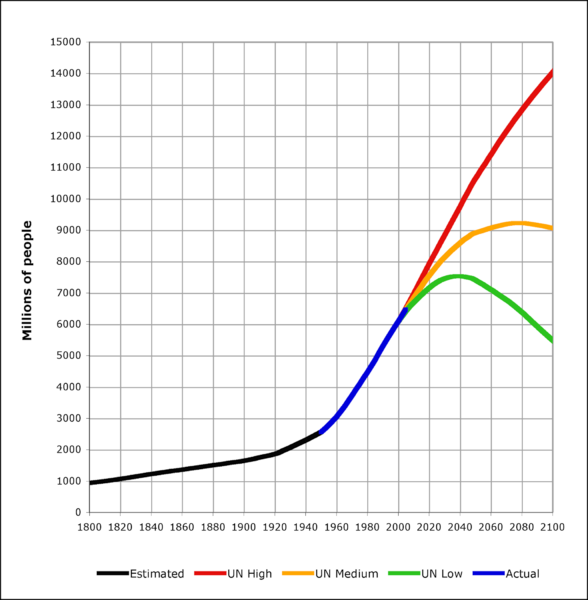
Population: The Elephant in the Room; Peak Oil Implications on Population Growth; What Level of Human Population is Sustainable?: "In the last 200 years the population of our planet has grown exponentially, at a rate of 1.9% per year. If it continued at this rate, with the population doubling every 40 years, by 2600 we would all be standing literally shoulder to shoulder." says Professor Stephen Hawking as reported by Edward Morgan in Looking at the New Demography.


Suffice to say the rate of population growth will not continue, and Morgan makes the case we are already in stage 5 of The Demographic Transition Model


click on chart for sharper image


Peak Oil Implications on Population Growth


Whereas Morgan presents a relatively benign view of things, even wondering if there are ways to reverse stage 5 decline, Paul Chefurka in Population: The Elephant in the Room sees things quite differently, primarily because of oil usage.

Each of the global problems we face today is the result of too many people using too much of our planet's finite, non-renewable resources and filling its waste repositories of land, water and air to overflowing. The true danger posed by our exploding population is not our absolute numbers but the inability of our environment to cope with so many of us doing what we do.


It is becoming clearer every day, as crises like global warming, water, soil and food depletion, biodiversity loss and the degradation of our oceans constantly worsen, that the human situation is not sustainable. Bringing about a sustainable balance between ourselves and the planet we depend on will require us, in very short order, to reduce our population, our level of activity, or both. One of the questions that comes up repeatedly in discussions of population is, "What level of human population is sustainable?"


Oil first entered general use around 1900 when the global population was about 1.6 billion. Since then the population has quadrupled. When we look at oil production overlaid on the population growth curve we can see a very suggestive correspondence:


A closer look at the two curves from 1900 to the 2005 reinforces the impression of a close correlation:


The first questions everyone one asks when they accept the concept of Peak Oil is, "When is it going to happen?" and "How fast is the decline going to be?"


The steepness of the post-peak decline is open to more debate than the timing of the peak itself. There seems to be general agreement that the decline will start off very slowly, and will increase gradually as more and more oil fields enter decline and fewer replacement fields are brought on line. The decline will eventually flatten out, due both to the difficulty of extracting the last oil from a field as well as the reduction in demand brought about by high prices and economic slowdown.


The post-peak decline rate could be flattened out if we discover new oil to replace the oil we're using. Unfortunately our consumption is outpacing our new discoveries by a rate of 5 to 1. to make matters worse, it appears that we have probably already discovered about 95% of all the conventional crude oil on the planet.


A full picture of the oil age is given in the graph below. This model incorporates actual production figures up to 2005 and my best estimate of a reasonable shape for the decline curve. It also incorporates my belief that the peak is happening as we speak.


In ecology, overshoot is said to have occurred when a population's consumption exceeds the carrying capacity of its environment, as illustrated in this graphic:


Overshoot


Populations in serious overshoot always decline. This is seen in wine vats when the yeast cells die after consuming all the sugar from the grapes and bathing themselves in their own poisonous alcoholic wastes. It's seen in predator-prey relations in the animal world, where the depletion of the prey species results in a die-back of the predators. Actually, it's a bit worse than that. The population may actually fall to a lower level than was sustainable before the overshoot. The reason is that unsustainable consumption while in overshoot allowed the species to use more non-renewable resources and to further poison their environment with excessive wastes.


In the case of humanity, our use of oil has allowed us to perform prodigious feats of resource extraction and waste production that would simply have been inconceivable before the oil age. If our oil supply declined, the lower available energy might be insufficient to let us extract and use the lower grade resources that remain. A similar case can be made for a lessened ability to deal with wastes in our environment.


Excess Deaths


[Chefurka goes through a series of grim charts culminating with with this explanation of what is coming]


The Cost


The human cost of such an involuntary population rebalancing is, of course, horrific. Based on this model we would experience an average excess death rate of 100 million per year every year for the next 75 years to achieve our target population of one billion by 2082. The peak excess death rate would happen in about 20 years, and would be about 200 million that year. To put this in perspective, WWII caused an excess death rate of only 10 million per year for only six years.


Given this, it's not hard to see why population control is the untouchable elephant in the room - the problem we're in is simply too big for humane or even rational solutions. It's also not hard to see why some people are beginning to grasp the inevitability of a human die-off.
UN Population Projections


Let's put aside the really grim projections and simply ponder the "low population track" in the following charts of population projections from the UN.


I cannot find the article or source for that chart but the image is from a link on Seeking Alpha.


Demographic and Economic Questions


  1. Is that low UN track that unbelievable? If not, what if the starting point is now, not 2040?

  2. Who is going to pay the medical costs of all the retirees in the developed-world if people live longer and the population simply stagnates?

  3. Where are the energy resources going to come from if the population keeps growing instead?

  4. Where are the energy needs of China alone going to come from at the current rate of China's economic growth regardless of whether the Chinese population grows or not?


Those who think we are going to "grow" our way out the the current global economic mess better have good answers for the questions in points number one and three above.


Problem number two is a huge problem in Japan right now. Thee US will face the same problem not too far down the road.


Those who suggest immigration and population growth is the solution to problem number two better have an answer to question number three while also explaining how immigration and population growth is nothing more than a can-kicking exercise.


The China problem is right here, right now. Peak oil all but ensures China's growth rate is going to plunge in the not too distant future, there is going to be a huge global showdown over oil supplies with China the winner, or a cheap easy to produce means of renewable energy is found in the next five years?


Mike "Mish" Shedlock

http://globaleconomicanalysis.blogspot.com

Click Here To Scroll Thru My Recent Post List
Mike "Mish" Shedlock is a registered investment advisor representative for SitkaPacific Capital Management. Sitka Pacific is an asset management firm whose goal is strong performance and low volatility, regardless of market direction.
Visit http://www.sitkapacific.com/account_management.html to learn more about wealth management and capital preservation strategies of Sitka Pacific.

Monday, January 9, 2012

ehci - Enhanced human computer interface through webcam image processing library - Google Project Hosting

ehci - Enhanced human computer interface through webcam image processing library - Google Project Hosting:

'via Blog this'

Comic for December 20, 2011

Comic for December 20, 2011:

Hybrid HTML5 Apps Are Less Costly to Develop Than Native

Hybrid HTML5 Apps Are Less Costly to Develop Than Native:

html5_150x150.jpgIt seems like a fairly straightforward question: As a developer, business and enterprise, do I develop Web apps, native apps or some combination thereof? Answers to that question are anything but simple. Who is your target audience? What is the purpose of the app? There are a series of diverse questions that must be answered before jumping right into development.


Research firm Forrester, as is its wont to do, attempts to answer the question. Forrester's answer? It's complicated. The firm's answer to Web v. Native has evolved since the middle of 2011 though. Last year, Forrester said to do both native and Web-based apps. At the beginning of 2012, the firm has changed its tune.


Sponsor


The Choice Between Native Code and HTML5 is a False One


Forrester is right with its assertion that native v. HTML5 is a false choice, as anyone who reads ReadWriteMobile on a regular basis can readily tell you. Foremost, there are really four different tracks mobile developers can take as opposed to the basic notion of Web or native.


Here are the options and the strengths/weaknesses of each choice:


Native development: Native gives the best user experience, performance and access to device APIs (camera, contacts, phone state etc.). The problem with native is that it is difficult is fragmented between the four major mobile platforms (iOS, Android, Windows Phone, BlackBerry) because each uses a different code base. Forrester says that enterprise development shops that plan on writing distinct native apps for each platform should plan on a budget 150% to 210% higher than what might be reasonably expected.


Web Apps With HTML5 & JavaScript: The browser is ubiquitous. New HTML5 tags have evolved for < audio > and < video > and device access APIs have dramatically increased the capability of Web apps. Yet, JavaScript is still not as fast as native code, the user experience is often left wanting and liquid (or "responsive") design is not yet at the point where the average enterprise development department can easily format Web apps for various smartphone and tablet screen sizes.


Hybrid: HTML5 + JavaScript with a wrapper that gives it native capabilities. This is how Facebook does it variety of mobile apps and precisely what solutions like PhoneGap are designed for. To a certain extent, this is the best of both worlds. Develop for the Web, where Forrester says you will find more knowledgeable coders, and wrap for native. In the future we are likely to see a majority of apps built in this fashion.


Mobile Middleware: These are the various Integrated Developer Environments that are used to develop apps on client and server-side components. This is more common in enterprise development studios that use established systems such as Oracle or SAP.


forrester_webvnative_jan12.jpg


Think About Costs & Resources


Forrester recommends a Web approach for developers and enterprises. In today's environment, it is more likely that development studios will find talented coders that are well-versed in Web technology while the run-of-the-mill coder is not specifically an expert on the variety of languages it takes to create and app for the four major platforms. From Web apps, Forrester recommends moving to a hybrid approach. While native apps are often more visually attractive and have powerful device access APIs, the cost to develop across platforms may be prohibitive.


"As firms move from two to three platforms and even contemplate adding Windows Phone 7, they will find that native development becomes increasingly untenable from an economic point of view. Add in multiple releases a year as the mobile platform vendors update their operating systems, and most shops simply aren't prepared to spend that much more on their custom application development efforts," Forrester writes.


Developers: Do you agree with Forrester's assertions? It certainly seems clear that the hybrid approach will soon come to dominate the mobile landscape. Hybrid is the perfect blend for cost-conscious studios that also need to be represented on the various app repositories such as the Apple App Store and Android Market. Let us know what you think in the comments.


Discuss


FBI's Beleaguered Sentinel Project Delayed Again - Government - Enterprise Applications - Informationweek

FBI's Beleaguered Sentinel Project Delayed Again - Government - Enterprise Applications - Informationweek:

FBI's Beleaguered Sentinel Project Delayed Again

Bureau's next generation case-management system suffers another setback, as performance issues arise in testing and push deployment out to May.


An FBI project to develop a digital case-management system to replace outdated, paper-based processes has been delayed again, despite the agency's decision to use agile development to hasten its completion. The system, called Sentinel, is now due to be deployed in May, eight months later than the FBI planned when it embarked on the agile development strategy.

It's the latest in a series of delays to build a replacement for the FBI's 17-year-old Automated Case Support system, used by agents and analysts to manage documents and other information related to their cases. In 2006, the FBI awarded Lockheed Martin a $305 million contract to lead development of Sentinel, but it took back control of the project in September 2010 amid delays and cost overruns. At the time, the FBI said it would finish Sentinel within 12 months using agile development.

[ The FBI plans to upgrade its technical capabilities in other areas also. Read FBI To Get More Cyber Crime Agents. ]But that worked slipped (the FBI had earlier pushed Sentinel's deployment from September 2011 to January 2012), and a four-hour test of the system in October resulted in two outages, according to an Inspector General report released in December. The FBI attributed the glitches to overburdened legacy computer hardware and said the hardware will need to be upgraded to support Sentinel's use across the agency, according to the IG.

The agile development approach is a big bet for FBI CIO Chad Fulgham and CTO Jeff Johnson, former IT executives with brokerage firm Lehman Bros., who inherited the project when they joined the agency in 2008 and 2009, respectively, and determined that a new strategy was needed to get the high-profile project across the finish line. At the time that Fulgham announced that Lockheed Martin would have a diminished role, his goal was to complete the project by September 2011 and with the funding that had already been appropriated, $451 million. Congress has kept a wary eye on Sentinel, which is now more than two years past its original due date.

While Sentinel's completion has slipped again, the project remains within budget. However, the IG expressed doubt regarding the FBI's ability to hit its new deployment date and stay on budget. "Because of the uncertainties associated with the hardware procurement and the cost associated with the additional delay in Sentinel's development and procurement, we remain concerned about the FBI's abilities to remain within its budget," the IG stated.

Speaking at InformationWeek's Government IT Leadership Forum last May, Fulgham and Johnson explained the FBI's rationale for switching from "waterfall" development, where project requirements are laid out early and delivered over many months, to agile methodology, where capabilities are developed in two-week sprints. The FBI's new approach involved co-locating application developers and testers, generating frequent releases, producing only what's needed, and continuously integrating software, systems, and business processes.

The FBI set aside $32.6 million of Sentinel's budget for agile development, and by December it had spent half of that amount, according to the IG. The FBI's latest timeline calls for Sentinel development to be completed next month, followed by 12 weeks of testing and agency-wide deployment in May.

In October, the FBI tested Sentinel on the same infrastructure it will use to host the system and deliver its capabilities to the agency's headquarters and branch offices. The test involved 743 users running case-management tasks through 13 scenarios. The system encountered "significant performance problems" during the test, and the FBI will have to "significantly expand the infrastructure" to support a broad rollout, according to the IG.

The IG deemed the test "an important step," but expressed concern that the shoddy performance would discourage user acceptance. The FBI awaits a proposal from Lockheed Martin on what it will cost to upgrade the computer hardware.

The IG deemed it "too early to judge" whether the FBI is on track to hit Sentinel's latest project completion goal, and it questioned whether the agency would have money left in the Sentinel budget to operate and maintain the system once it's implemented. It recommended that the agency update its lifecycle management policies for agile development and conduct further testing to ensure that system performance is acceptable over the FBI's network.

When the FBI transitioned to agile development, the number of Lockheed Martin employees involved in the project was curtailed from 135 to 10. The FBI's contract with the defense company is due to expire in May. Last year, the FBI added a one-year option, valued at $4.5 million, to cover development work through October.

In a Dec. 19 letter to the IG responding to its draft report, Fulgham characterized the slip in Sentinel's schedule as a "modest extension." As of early December, 88% of Sentinel's required functionality had been completed, he said.

'via Blog this'

Silicon Valley may be too smart for its own good | VentureBeat

Silicon Valley may be too smart for its own good | VentureBeat:

Silicon Valley may be too smart for its own good

Silicon Valley’s greatest asset is the brilliant minds that roam the buildings and inhabit the coffee shops. Since moving back to Silicon Valley in June, I’ve met a lot of amazing people. On average, they are the smartest people I know. I have conversations on a regular basis that I just can’t have anywhere else. Yes, I’ve worked with smart people in other places, but the concentration here is unique.

But that brilliance comes with some blinders. Instead of figuring out how to adapt to real users, we too often expect them to adapt to us.

In a post last week about car-service Uber’s outlandish New Year’s Eve surcharges, I made the seemingly innocuous comment that the multiplier Uber used to explain the pricing was confusing to casual users; that it’d be better to display a rate in dollars or the minimum charge at a given time. A number of people responded that a user can do the math, so it’s not a big deal.

Yes, an Uber user who knows the regular rate could multiply it by the multiplier and figure out what the current rate is. But why should they have to? A computer can do it better and faster. One of my core design philosophies is that you shouldn’t make users do work that computers can easily do.

Although Uber claims to have tested price elasticity on New Year’s Eve, what they really tested was the ability of drunk people to comprehend a bad user interface. If they had truly tested price elasticity, there should have been no complaints about the surge pricing because the people who paid 6x the normal rate would have been satisfied with their decision.

I hear similar tone-deafness when it comes to things like screen size, compute power and connectivity. We Silicon Valley types are sitting at 24″ monitors with the latest hardware connected to 20 Mbps pipes designing products that are used by people with five-year-old computers at DSL speeds or worse. Not everyone has the desire (or the money) to upgrade their computer or phone every year. I see many products that while beautiful and elegant in the right environment, wouldn’t work well in many homes.

I recently met with EverFi, a company that provides online learning tools to high schools. EverFi actually ships discs with Flash files to some schools because their connectivity is so bad that an entirely online experience wouldn’t work well. That’s the kind of thinking I like to see, but more commonly, companies would take a “Let them buy iPads” approach.

Many in Silicon Valley often miss the fact that most of the population does not dramatically change behavior overnight. Behavior changes gradually over time.

I spend a lot of time talking with small businesses and entrepreneurs who are trying to sell into small businesses. Inevitably, entrepreneurs will tell me how they plan to wow small business owners with the reams of great demographic data they can generate, if only the business will switch its operations to a new platform. They’re shocked when I tell them most small businesses don’t give a shit about data. That’s not how they run their business. They will, some day. But not now.

I’ve met with business owners who run daily deals that don’t use computers on a regular basis. In some cases, they can’t even tell if a voucher was redeemed because tracking is done with pencil and paper. In Silicon Valley, we live and breathe data, so this is hard to fathom.

It’s not because they’re country bumpkins who live in flyover states. Anyone trying to sell in to small businesses should read what it takes to sell to a restaurant by Jonas Luster, who describes himself as an “uneducated Southern hick,” though he is anything but.

I worked at a startup that sold unified communications services. If you don’t know what that is, you’re not alone. The initial product was designed by a team of rockstar telecomm engineers who had left Lucent. It did everything you could ask for. But consumers weren’t asking. We dramatically simplified the product into services consumer could understand — fax, phone, voicemail. We nearly doubled our prices and got more people to buy.

Too many people in Silicon Valley are enamored of technology for the sake of technology. Two of my favorite companies — GrubHub and Savored — use decidedly low-tech ways to accomplish their goals. GrubHub sends orders to many restaurants via fax machine (gasp!). Savored creates the impression of dynamic pricing for restaurant reservations, even though in reality discounted tables are manually blocked off based on typical traffic patterns. Savored could have focused on developing the ideal yield management system, but their approach works today and provides at least 80% of the value.

Square, another great company, uses 1980s technology because that is the technology used on hundreds of millions of credit cards that are in consumers’ wallets. People who have never used a computer can pay a Square merchant by pulling out a piece of plastic. At the same time, Square innovates with products like Card Case, which allows more tech savvy consumers to pay just by saying their name. On the merchant side, Square is getting people hooked with an elegant solution that solves an immediate, easy-to-understand need (payments) and then slowly inching them into other more sophisticated products like point-of-sale systems.

People in Silicon Valley are passionate about their products — which is great. They should be. But you can’t assume that your users are. Most consumers aren’t going to read every email you send them, follow you on Twitter or read your blog. The product needs to stand alone. It needs to get people excited.

The competition for most startups is not the 10 other companies that are doing essentially the same thing, but NFL football, American Idol and the billion other things that people could be doing.

“The truth is, startups design stuff for people like themselves, not for the mass market,” wrote Cynthia Schames, a friend from outside the Valley. “And they expect everyone to put up with a half-baked, unreliable ‘product’ just because TechCrunch wrote about it.

“It’s almost like they’re too smart for their own good; like that guy at a cocktail party who refuses to speak in anything but hedge fund terminology … he’s not getting a date, because she can’t tell what the hell he’s talking about, and also because he’s an insufferable ass.”

When things go wrong, the reflexive action in Silicon Valley is to blame the consumer instead of taking at least partial responsibility. Uber’s blog post in response to the surge pricing is arrogant. The tone is “You just don’t get it. We’re really, really smart.” AllThingsD asked if New Year’s Eve was Uber’s “Netflix moment.”
I don’t think it is — yet.

Uber didn’t make a giant mistake. There isn’t a fundamental business model problem. The company provides a valuable service that some people are willing to pay a premium for. It has users and drivers who love the service.

It can get past this: Fix the UI, offer no-questions-asked refunds of the New Year’s Eve surcharge to customers who feel they were misled and move on.

Tech writers aren’t immune from Silicon Valley’s blinders. Too many blog posts repeat vanity milestone statistics released by companies instead of asking tough questions like “Do real people actually use this?” “Is there a business here?”

Instead of being critical and pushing companies to be better, we do glowing profiles of founders. We snicker at “idiots” who don’t understand pricing strategies that were deliberately designed to be confusing. They’re not idiots. They’re real people with real money to spend.

And as special a place as Silicon Valley is, we sometimes forget that not everything innovative happens here. After my piece on demand-based pricing and Uber, a friend from Minnesota called me out for using the San Francisco demand-based parking meter experiment as an example when other cities have been testing it, too. Such reporting helps foster the impression that there is nothing of value anywhere else and gives people in the Valley a bigger head, he said. Tech blogs should use more examples from outside the Valley.

He’s right. GrubHub is based in Chicago and EverFi is based in Washington, DC.

Rocky Agrawal is an analyst focused on the intersection of local, social and mobile. He is a principal analyst at reDesign mobile. Previously, he launched local and mobile products for Microsoft and AOL. He blogs at http://blog.agrawals.org and tweets at @rakeshlobster.

'via Blog this'

Out on a limb

Out on a limb:

That's where artists do their work.


Not in the safe places, but out there, in a place where they might fail, where it might end badly, where connections might be lost, sensibilities might be offended, jokes might not be gotten.


If you work with artists, don't saw off the limb. Don't waste a lot of time explaining how dangerous it is, either. No, your job is to quietly support the limb at the same time you egg your team on, pushing them ever further out there.


"Transparent vector jpeg will do just fine."

"Transparent vector jpeg will do just fine.": “Transparent vector jpeg will do just fine.”

- The file format my client wants his photographs in

Myers-Briggs personality types, classic

2012.01.08.briggs.png